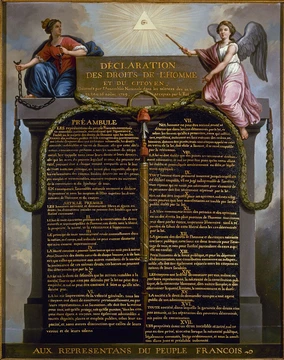
Municipal charter
A legal document establishing a city or town as a municipality.

A municipal charter is a legal document that establishes a municipality such as a city or town, serving as its constitution by defining the structure and powers of the local government. The concept developed in Europe during the Middle Ages, where granting a charter gave a settlement and its inhabitants town privileges under the feudal system, distinguishing burghers in chartered towns from serfs in villages.
- type
- Legal document
- origin
- Europe, Middle Ages
- purpose
- Establish municipality and define local government structure and powers
- key_feature
- Grants town privileges; distinguishes burghers from serfs
- modern_use
- Adapts municipal governments for major cities, often granting additional powers
Lore & Background
The concept of a municipal charter developed in Europe during the Middle Ages. Under the feudal system, a charter granted a settlement and its inhabitants the right to town privileges. Townspeople in chartered towns were known as burghers, unlike serfs in villages. Many towns were 'free,' meaning they were directly protected by the king or emperor and not part of a feudal fief.
Reader's Guide
Municipal charters remain significant as the foundational legal documents for cities and towns. In modern times, they are often granted to major cities and economic centers to adapt municipal governments to urban needs, sometimes providing additional powers compared to general-law municipalities. In the Philippines, charters have been enacted by national legislatures since American colonial rule, with many requiring a plebiscite for ratification. The charter remains the most important legal document of any city, defining its organization, powers, functions, and essential procedures.
Did You Know?
- A charter is a municipal constitution establishing the structure and powers of local government.
- Townspeople in chartered towns were burghers, as opposed to serfs in villages.
- In the United States, a municipal charter may be established after a referendum vote of the affected population.
More in Constitutional And Rights Law 1-19
Spotted an error? Know more?
This is a living reference — every entry is fact-audited, and reader corrections feed straight into our audit queue. Suggest an edit · See this site's audit record